Pest library
Mosquitoes
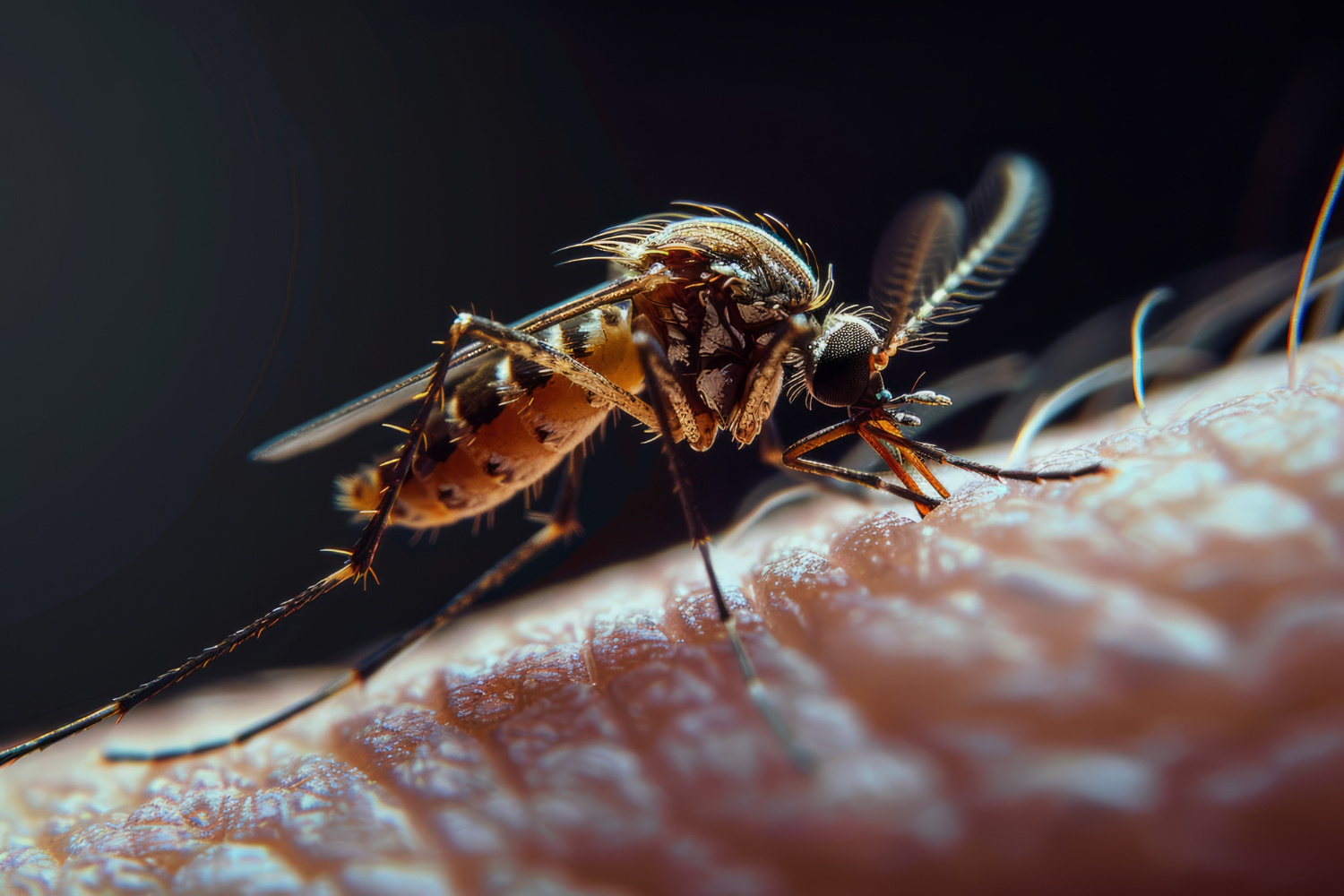
Mosquitoes carry malaria and dengue. Controlling them means finding the standing water they breed in.
Anopheles spp., Aedes aegypti
Mosquito control is public health work. Anopheles mosquitoes transmit malaria, which remains one of the most serious health burdens in Malawi, and Aedes species carry dengue and related viruses.
Adults are the visible problem, but the larvae are the practical one: a mosquito needs only a bottle cap of standing water to breed. Spraying adults without dealing with the breeding sites buys a few days at most.
Signs you have mosquitoes
- Biting activity at dawn and dusk, and through the night
- Larvae wriggling in standing water — tanks, gutters, tyres, drains
- Resting adults on shaded walls and under eaves
- Increased complaints after the first rains
Why it matters
- Transmits malaria, dengue and other vector-borne disease
- Lost working days across a workforce
- Makes outdoor areas unusable for guests and staff
- A particular risk for lodges, schools and clinics
How we treat it
We survey the site for breeding water first and deal with it — removing it where we can, treating it with larvicide where we cannot. We then apply residual treatment to resting surfaces, and use thermal or ULV fogging where a rapid knockdown of adults is needed for an event or an outbreak.
For lodges and compounds we set up a scheduled programme, because a single treatment before the rains is not the same as control through a season.
Book a free site inspection
Tell us what you are dealing with and we will assess the site, identify the source and quote you a treatment plan — at no cost.